Barbara Bergmann: Managing Editor. Editor
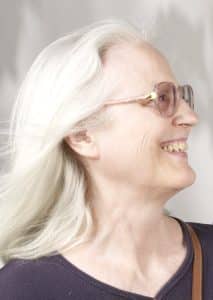
After graduating from Beloit Memorial High School in 1962, Barbara Bergmann took one of the 5 scholarships offered and went to the University of Wisconsin, Madison where she got a BA and then PhD in Linguistics in 1972.
While studying, she married, learned to program on the University’s huge mainframe computer, worked as the Handicap Coordinator of Madison’s Head Start program, adopted a son, gave birth to a son, and then moved with her family to Indianapolis, IN.
She divorced and became a single mom in 1981. She became an early gig worker teaching English at IUPUI where she trained in and then taught study skills. She became an early teacher of computer use in writing English assignments.
She applied to the Inana University program to set up a two-year university in Malaysia, was accepted, and joined the teaching staff in 1985. She took her two sons, 9 and 7, with her and they enrolled in the International School of Kuala Lumpur. The children commuted back and forth to California, where their father was located. Trips with them included getting to know Sacramento, CA and attendance at the 1987 Linguistics Institute at Stanford.
While teaching in Malysia, she was part of the Faculty Squares, a dance group that met regularly to learn and perform square dances. She learned to love the local cuisine, especially “tay tarey” at a local outdoor restaurant that specialized in pouring milk from a jug into a cup of tea by raising the pouring jug above the cup. Thus, its name of “pulled tea.”
In 1988, across a crowded room, she saw Gordon Grigsby, Professor of English at the Ohio State University who was going to teach a year and return home. She immediately knew that she needed to stay away from him. Of course, that didn’t happen.
In 1989, when Barbara returned to the US, she moved to Columbus, OH, where he returned and they continued their love affair. But when multiple gigs (teaching at Columbus State, clerking at a local bakery shop, doing the US Census) became too difficult to continue paying the bills and with Gordon’s reluctance to marry, she sought refugee with her X in Sacramento. His home had an extra bedroom and the boys already had their room, so they she started roots in California.
After three months and many long-distance calls, Gordon realized that he really didn’t want to live without her. Barbara was able to move to an apartment (gigs at American River College as an English teacher and delivering pizza) and she and Gordon married in 1963.
There was one problem: when her son was born, she promised that if either child started high school, she wouldn’t pull them out for any reason. That meant staying in Sacramento until the youngest graduated from the International Baccalaureate program at Mira Loma High School in 1996. Gordon helped buy a home, which later sold at a nice profit when she was able to resettle to Columbus.Life on the Olentangy River in Mt Air, OH was wonderful: more teaching, becoming a client of a job placement company working as a Lotus Notes programmer at 3 companies in Columbus, teaching water aerobics, working on the Dennis Kucinch presidential campaign, teaching computer use to boomers and seniors, working at a call center, being a wife.
In 2007, Barbara, Gordon, and Kip Knott founded Evening Street Press & Review, Inc. A semi-annual Review, then a chapbook contest (Helen Kay Chapbook Contest named after Gordon’s mother) and a poetry book contest (Sinclair Prize named after Gordon’s grandmother) were added. Other books followed. A website features all the work: eveningstreetpress.com/
Crisis in Sacramento meant Barbara went there alone to help out with a grandchild. Trips back and forth by both Barbara and Gordon followed. Until Gordon came to Sacramento to stay and died in 2017. eveningstreetpress.com/gordon-grigsby/
Barbara had retired and continued as editor of the press, adding a DIY Prison Project to allow the more than 30 writers an opportunity to have an outlet for their work whose work had been accepted in the Evening Street Review. A committee of incarcerated people was formed to vet work from prisons, which were then published online on the website: www.eveningstreetpress.com/diy-prison-project More than 100 incarcerated writers’ work was posted on the site when the project was discontinued in 2026.
